The Director General of Cyberspace and Media of the Islamic Culture and Communications Organization, referring to the importance of the role of female journalists in narrating events, said: "The enemy is trying to completely censor and limit the field of narrative and reduce it to the space it wants."
The enemy is trying to censor and limit the realm of storytelling.
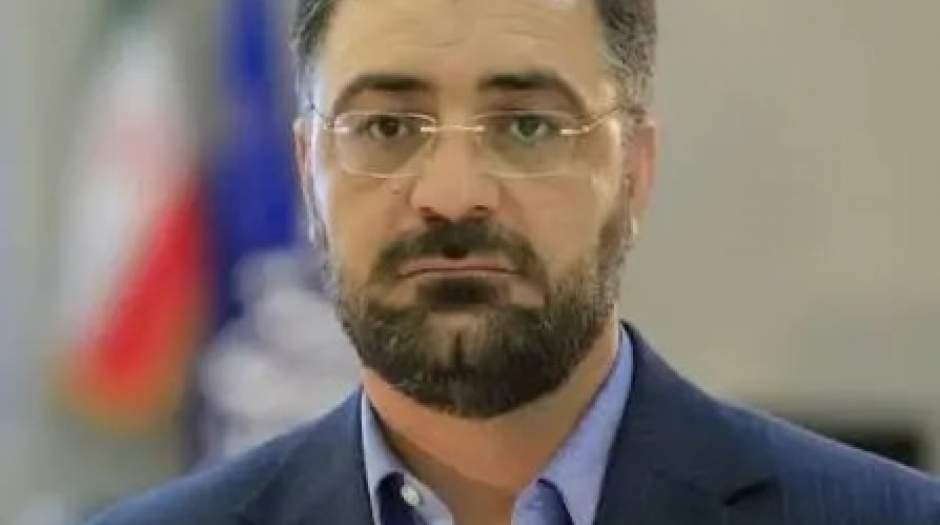
According to the report of Democracy Online , quoting an ILNA reporter, Mohammad Qaderi, Director General of Cyberspace and Media of the Islamic Culture and Communication Organization, said at the international meeting "Boycott the Truth; Women Journalists in Captivity of the Zionist Regime": The first point is that I personally consider the issue of women's presence in the field of narrative and media to be a mujahidin; because perhaps at first glance, it is not the duty of women to be present and narrate events, especially in areas where war and conflict have occurred.
Qaderi continued: With the changes that have occurred in the type and nature of wars in the international arena, wars have moved away from a one-dimensional state and become a multifaceted battle. Perhaps the most important aspect of combined wars in the present era is its cognitive and perceptual aspect.
He clarified: You are also witnessing how important this issue is in this recent imposed war by the United States and the Zionists against the Iranian nation; In a way that someone like Trump is also trying to use this space to influence the perceptual and cognitive sphere. Therefore, a change has been created in the international arena and the type of international conflicts naturally uses different tools.
The Director General of Cyberspace and Media of the Islamic Culture and Communications Organization said: We are witnessing changes and developments in different areas of power. Therefore, if we consider the media, human media, journalists and anyone who is in some way responsible for transmitting the message as an effective tool and member in this war, naturally we must pay attention to how effective this presence and participation in such an environment can be.
Qaderi added: Here I need to mention another point. If we go back to the past and history, we see that at times when women have taken on the task of historical narration, the impact of these narratives is quite clear and lasting to this day, and perhaps the permanence of these narratives has been greater than many similar narratives made by others, especially men.
He continued: "In my opinion, the most important reason for this is that while a person sees a truth and conveys it and does so based on a logic, at the same time the element of emotion and feeling is also involved in the story, and naturally the impact of that narrative will be much greater." The
Director General of Cyberspace and Media of the Islamic Culture and Communications Organization stated: "This is why you see that in the patterns of well-known wars of the West, in international spaces, a great deal of effort is being made to use the female element to establish their fake narratives."
Qaderi said: "This is a special task that a female journalist or a woman who actually carries out this struggle, especially by being present in the field, is responsible for. Those who have this experience will realize that the conditions in such an environment are fundamentally different from the conditions in which a journalist works in a newspaper room or news agency and conducts interviews."
He added: "When war is taking place in the field, narrative also finds different conditions. A historical example of this is the Ashura incident, which has survived to this day, and in practice, the seemingly victorious movement on the day of Ashura, namely the Yazidi movement, saw its narrative face defeat."
Qaderi continued: In the historical books written around 61 AH, those who generally played the role of official media in the modern sense presented their narrative in line with the plan of victory in the war; but the narrative that Hazrat Zaynab (PBUH) led remained.
He clarified: Hazrat Zaynab (PBUH) narrated the story whether in Kufa, in Damascus, or in the presence of Yazid himself, and the narrative she presented is still trending after 1400 years. All this confrontation was also because efforts were made to eliminate that narrative, but this did not happen.
The Director General of Cyberspace and Media of the Islamic Culture and Communications Organization emphasized: Therefore, the importance of this issue is to the extent that a journalist's narrative can have such permanence.
Qaderi continued: On the other hand, this is also why our enemy is trying to completely censor and limit the field of narrative and reduce it to the space that he himself wants to narrate.
He added: A female narrator, a journalist or narrator who works completely independently of the imposed and completely Western space, is definitely important in the eyes of the enemy's think tank and operations room, because this person's narrative can destroy all mental space constructions and media constructions at once.
Ghaderi stated: Another point I should mention is that we have witnessed important developments in the current space, especially over the past three years. We are now on the eve of October 15th or October 7th, which is the anniversary of Operation Storm al-Aqsa; a very big event that took place and was related to martyr Yahya Sinwar, Ismail Haniyeh and their likes.
He continued: This event was a great and vital event for the continuation of the resistance movement and formed a movement that, as you know, used all the hard and soft tools of the regime for nearly eight decades to establish a stable narrative in the public opinion of the world and among multiple generations.
The Director General of Cyberspace and Media of the Islamic Culture and Communication Organization said: "But recently, at least three times, if I'm not mistaken, Netanyahu himself mentioned in his statements - one of which was on the sidelines of the UN General Assembly last year - that they are lagging behind the resistance movement in the soft war."
Qaderi added: "Therefore, they tried to reconstruct the final narrative that should be established in public opinion; they used both online media and even cinema-like tools."
Qaderi continued: "They are trying to reread this narrative for newer generations; a generation that has been affected by the events of the past three years and feels that the movement is losing its narrative and position. Naturally, the role of technology on the one hand and the role of the character who is responsible for transmitting the message on the other hand, together can create a multifaceted relationship that helps to approve and perpetuate a narrative or prevents it from perpetuating."
He added: "If I were to summarize in this regard, I would like to point out two points. In any case, today, whether from the point of view of communication science and media science or from the perspective of ideological and doctrinal beliefs, if we look at the issue, in both fields and in every trend, we can realize the effective role of women journalists."
The Director General of Cyberspace and Media of the Islamic Culture and Communication Organization continued: From the perspective of modern technology and science in the field of communications, it is a proven scientific fact that narratives by women can have a greater influence on the audience and establish a narrative.
Qaderi stated: From the point of view of belief and ideological beliefs, we are also witnessing the same thing; that is, the role of a woman mujahid, the role of a woman who believes that at the end of this battle, victory will be on her own side, naturally forms a narrative that comes from the heart and is also combined with the element of emotion and feeling.
He clarified: The events that have occurred in the past few years have different examples. For example, what happened to Shirin Abu Aqleh was an example of what we saw in the world's media space. They publicly and deliberately martyred her, with the aim of eliminating a eloquent voice and with the aim of destroying a media trend; A trend that will naturally continue in the future.
Qaderi added: You saw that even social media pages on social networks, where women narrate on different topics, subjects, and situations, have been given attention. Based on an analysis conducted in some research spaces and also examined using artificial intelligence, it has been shown that algorithms like Meta deal with the issue of boycott and censorship of truth in a targeted and intelligent way, and by the way, they affect pages whose narrators are women the most.
He said: It was very interesting and thought-provoking for me to see how this issue happens. This shows that the penetration rate of storytelling by a female journalist who actively enters the field must have been effective in a place where these groups, especially those that operate under the Meta group, manage this issue even using various tools.
The Director General of Cyberspace and Media of the Islamic Culture and Communication Organization continued: They have fully realized the importance of the issue that the narrative of a female journalist, or even an activist in the field of war, regardless of her title and position, can have a significant impact; but naturally, such an impact may not be consistent with the image they present of the "free world."
Ghaderi stated: In France, the way the police and security structures and systems treat women is also a significant issue. You see smaller examples of the events that occur in this country, but they are easily ignored and the media in the international system is not allowed to cover them in principle, and immediately those who narrate these issues face severe security confrontations.
He emphasized: This issue shows the effectiveness of the narrative discussion and technical views in this field. Of course, expressing experiences is also very important, and many discussions can be raised about the existing capacities in this field.